Why Does My AC Struggle in the Afternoon but Cool Fine at Night?
Your air conditioner seems to work perfectly in the morning. The house is comfortable, the thermostat is satisfied, and everything appears normal.
Then 3:00 or 4:00 in the afternoon rolls around.
Suddenly, the air conditioner is running almost nonstop. The thermostat is set to 72°F, but the house has climbed to 75°F or 76°F. Maybe certain rooms feel noticeably warmer than others.
Later that evening, the outdoor temperature drops and your air conditioner finally catches back up.
Sound familiar?
This is a common complaint during hot North Texas summers, especially around Whitesboro, Gainesville, Sherman, Denison, Lake Texoma, Pilot Point, Tioga, and the surrounding communities.
Sometimes this behavior is completely normal. Other times, it's an early indication that your HVAC system isn't performing as well as it should.
Here's what's happening.
Your Home Gains Heat All Day Long
The hottest part of the day isn't necessarily when your house experiences its greatest cooling load.
Throughout the day, heat is constantly entering your home through the roof, attic, windows, exterior walls, doors, and air leaks.
Your attic can become especially hot after hours of direct sunlight.
By late afternoon, your air conditioner may be dealing with several things at once:
High outdoor temperatures
A hot attic
Heat absorbed by the roof and exterior walls
Sunlight coming through windows
People inside the house
Cooking and appliances
Air leaking into the home
Your A/C has to remove that heat faster than your home gains it.
When the outdoor temperature begins dropping in the evening, the cooling load decreases. That's why a system that struggled all afternoon may suddenly begin catching up after sunset.
Is It Normal for an AC to Run for a Long Time on a Hot Day?
Yes.
Long air-conditioning cycles aren't automatically a sign that something is wrong.
When outdoor temperatures are high, a properly sized air conditioner may run for extended periods. Longer cycles can actually help maintain consistent temperatures and remove humidity from the indoor air.
What deserves attention is when the system cannot maintain a reasonable indoor temperature that it previously could.
For example, if your air conditioner maintained 70°F during similar weather last summer but now struggles to keep the house below 83°F, something may have changed.

That's worth investigating.
1. A Dirty Outdoor Condenser Coil
Your outdoor condenser has an important job: releasing heat from your home into the outside air.
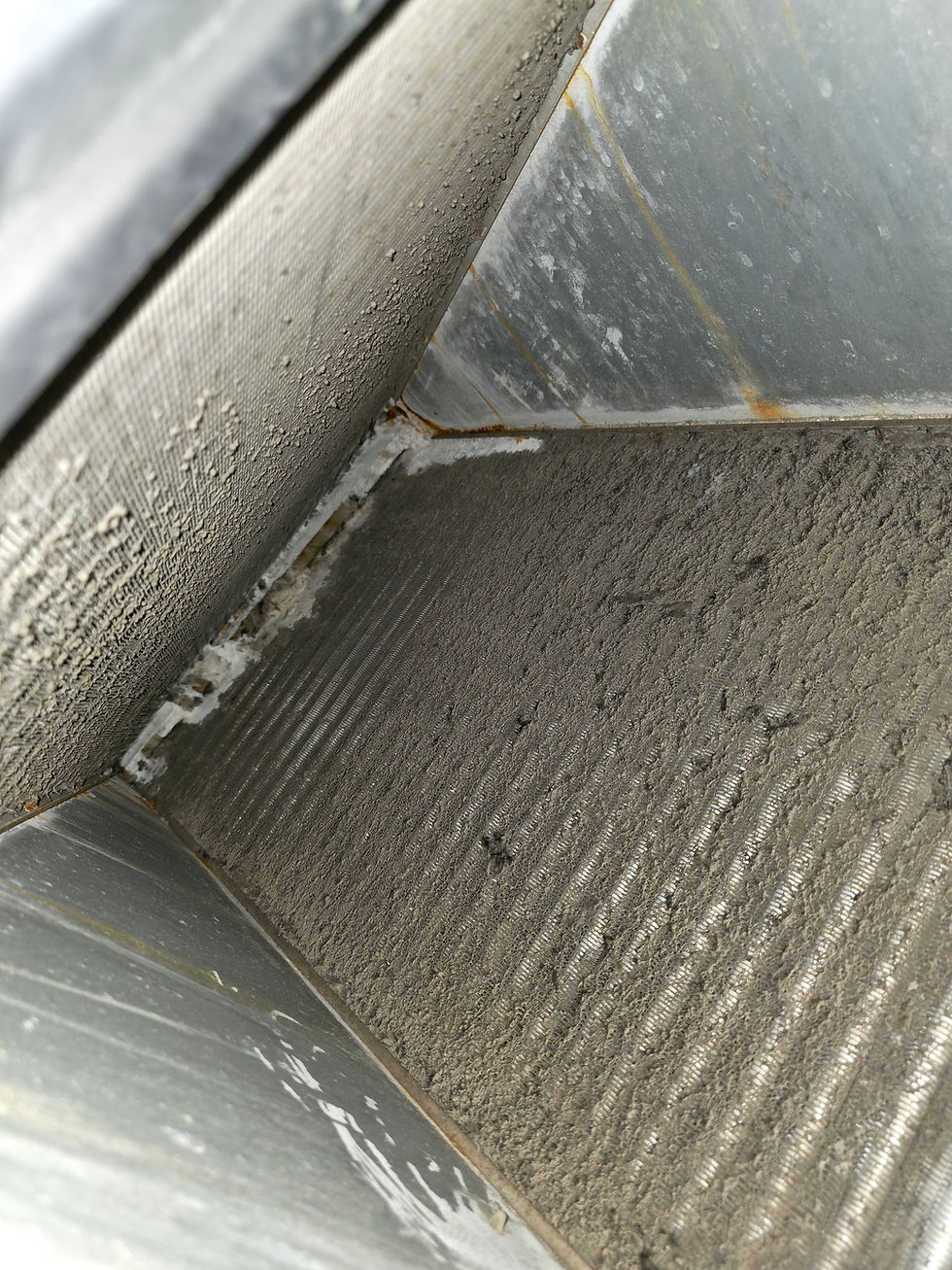
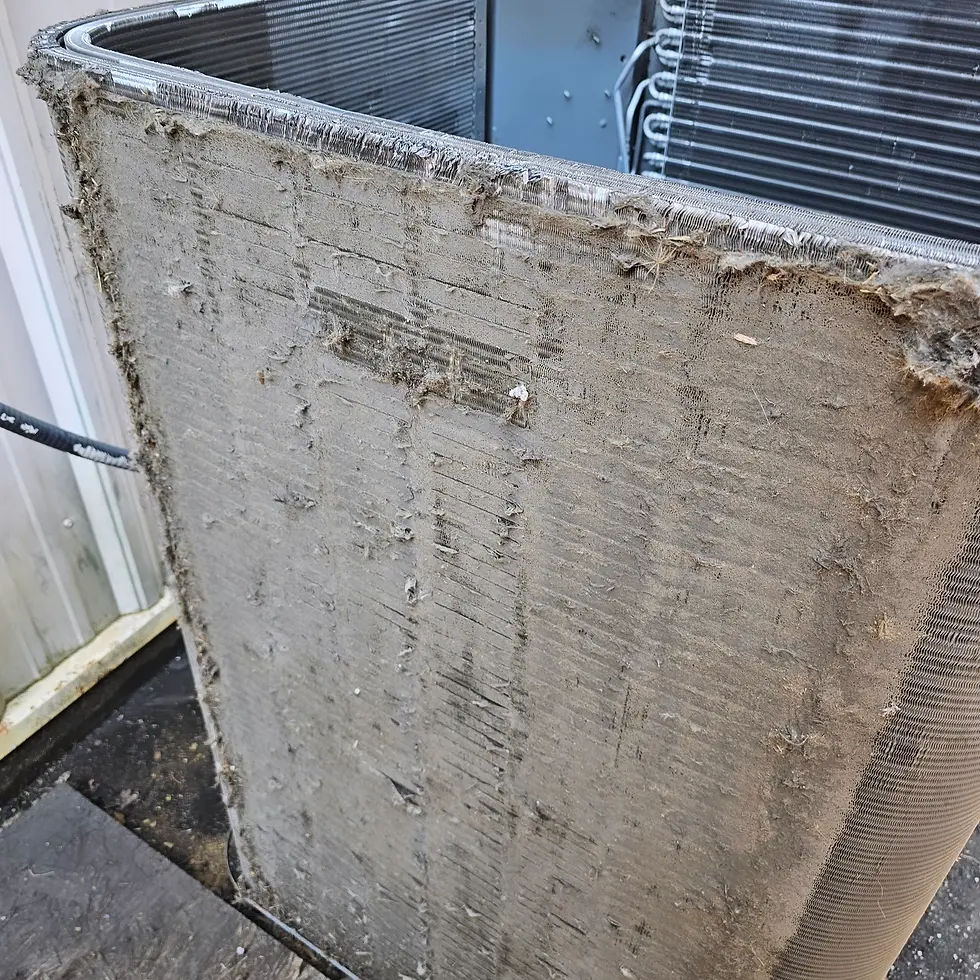
As dirt, grass clippings, cottonwood, dust and other debris accumulate on the condenser coil, airflow through the coil can become restricted.
That makes it harder for the system to reject heat.
The problem may not be very noticeable during the morning or evening when outdoor temperatures are lower. During the hottest part of the afternoon, however, reduced condenser performance can become much more obvious.
This is one reason condenser coil condition is something we check when diagnosing cooling-performance complaints.
And while we're talking about condenser coils: don't attack one with a pressure washer.
Too much pressure can bend the delicate aluminum fins and restrict airflow even further.
2. A Dirty Air Filter or Indoor Airflow Problem
Your air conditioner doesn't just need refrigerant. It needs airflow.
A heavily restricted air filter can reduce the amount of air moving across the evaporator coil and through your duct system.
Other airflow problems can include:
Dirty evaporator coils
Dirty blower wheels
Blower motor problems
Incorrect blower settings
Restricted return-air systems
Collapsed or damaged ductwork
Closed or improperly adjusted dampers
During mild conditions, the system may still appear to cool reasonably well.
When the cooling demand increases during the afternoon, that lost capacity becomes much more noticeable.

Severe airflow restrictions can also contribute to evaporator coil freezing.
3. Your Attic Is Getting Extremely Hot
North Texas attics can become brutally hot during the summer.
Your ductwork may be running directly through that environment.
If ducts are poorly insulated, damaged, disconnected or leaking, some of the cooling capacity you're paying for can be lost before the conditioned air ever reaches the rooms.
This can also help explain another common complaint:
“The living room is comfortable, but one bedroom gets hot every afternoon.”
The problem isn't always the air conditioner itself.
Duct design, insulation, return-air placement and the location of the room can all contribute.
4. Afternoon Sun Is Heating Certain Rooms
West-facing windows can create a significant afternoon heat load.
A room that feels comfortable at 10:00 AM may become noticeably warmer at 4:00 PM simply because of solar heat gain.
Large windows, older glass, insufficient attic insulation and limited shade can make the effect even stronger.
This is why replacing an air conditioner with a larger unit isn't automatically the correct solution.
The entire home's cooling load needs to be considered.
At Air Done Right Mechanical, proper system sizing can include a load calculation rather than simply assuming that the tonnage of the old equipment should automatically be installed again.
5. Your System May Be Low on Refrigerant
An air-conditioning system does not normally “use up” refrigerant.
If the refrigerant charge is low, there may be a leak or another issue that needs to be diagnosed.
Depending on the severity, a system may still provide some cooling during milder parts of the day but struggle when the cooling demand increases.
Low refrigerant isn't something that can be accurately diagnosed simply because “the air doesn't feel cold enough.”
Proper diagnosis requires looking at the system as a whole, including operating conditions, airflow, temperatures and refrigerant performance.
Simply adding refrigerant without determining why the system is low doesn't address the underlying problem.
6. The Outdoor Unit May Be Losing Performance
Capacitors, condenser fan motors, contactors and compressors operate under demanding conditions during a North Texas summer.

Electrical components can weaken or fail, condenser fan performance can deteriorate, and compressors can develop problems as equipment ages.
Some problems result in an immediate breakdown.
Others show up first as poor performance during the hottest part of the day.
That is one reason “it still cools” doesn't necessarily mean everything is operating correctly.
7. The Air Conditioner Could Be Undersized
An undersized system may simply lack enough capacity to handle the home's peak cooling load.
But system sizing is more complicated than square footage alone.
Proper sizing can be affected by:
Home size
Insulation
Windows
Ceiling height
Building orientation
Air leakage
Ductwork
Number of occupants
Construction characteristics
This is where an HVAC load calculation becomes valuable.
Installing a larger system without understanding the actual load can create a different set of problems.
Bigger Isn't Always Better
It sounds logical:
“If my current air conditioner can't keep up, I'll just install a bigger one.”
That's not necessarily the right answer.
An oversized air conditioner can cool the space too quickly and shut off before running long enough under normal conditions. Depending on the system and conditions, that can contribute to comfort and humidity-control problems.
Correct equipment sizing matters.
The goal isn't to install the biggest air conditioner that will fit.
The goal is to install equipment that matches the home's actual cooling requirements.
8. Your Thermostat Location Can Affect What You're Feeling
The thermostat only knows the temperature where the thermostat is located.
If it's in a shaded hallway while a west-facing bedroom is baking in afternoon sunlight, the thermostat may think the house is comfortable even though that bedroom isn't.
Airflow balancing, duct improvements, insulation, zoning or other solutions may be appropriate depending on the home.
Changing the thermostat setting lower doesn't necessarily fix the underlying problem.
When Should You Be Concerned?
A system running for long periods during extremely hot weather isn't automatically a problem.
We'd be more concerned if you notice a change in performance.
Examples include:
The system previously kept up but suddenly doesn't
Indoor temperatures continue climbing throughout the afternoon
Airflow from the vents has become weaker
Some rooms have suddenly become much warmer
Ice appears on refrigerant lines or the indoor coil
The system repeatedly turns on and off
You hear unusual noises
Your electric bill increases significantly without an obvious reason
The air conditioner runs constantly even after outdoor temperatures fall
Those symptoms are good reasons to have the system inspected.
Don't Judge Your AC by One Number
It's tempting to say:
“My thermostat is set to 72°F and it's 75°F inside, so my air conditioner must be broken.”
Not necessarily.
Outdoor temperature, humidity, solar load, insulation, equipment size, ductwork and the condition of the HVAC system all affect indoor temperature.
What matters more is understanding why the system isn't keeping up and whether its performance has changed.
That's the difference between diagnosing a problem and simply guessing.
AC Not Keeping Up in Whitesboro or the Lake Texoma Area?
If your air conditioner cools well at night but struggles every afternoon, there may be nothing seriously wrong—or your system may be showing the first signs of an airflow, refrigerant, electrical, ductwork or equipment-performance problem.
Air Done Right Mechanical provides residential and commercial HVAC service throughout Whitesboro, Gainesville, Sherman, Denison, Lake Texoma, Pilot Point, Tioga and surrounding North Texas communities.
We can inspect the system, determine what's actually causing the performance problem, and explain your options before recommending a repair or replacement.
When you want it done right, call Air Done Right.